Begin with what needs to improve
Before collecting finishes, write down the things that make your current bathroom difficult to use. You may need a better shower entrance, more storage, easier cleaning or replacement of worn fittings. Put those needs ahead of optional decoration. Tell the fitter who uses the room and whether a bath is still useful. A clear starting point helps compare layouts without filling the room with products that look attractive separately but do not solve the daily problem. Keep the list short enough to refer to during the home visit.
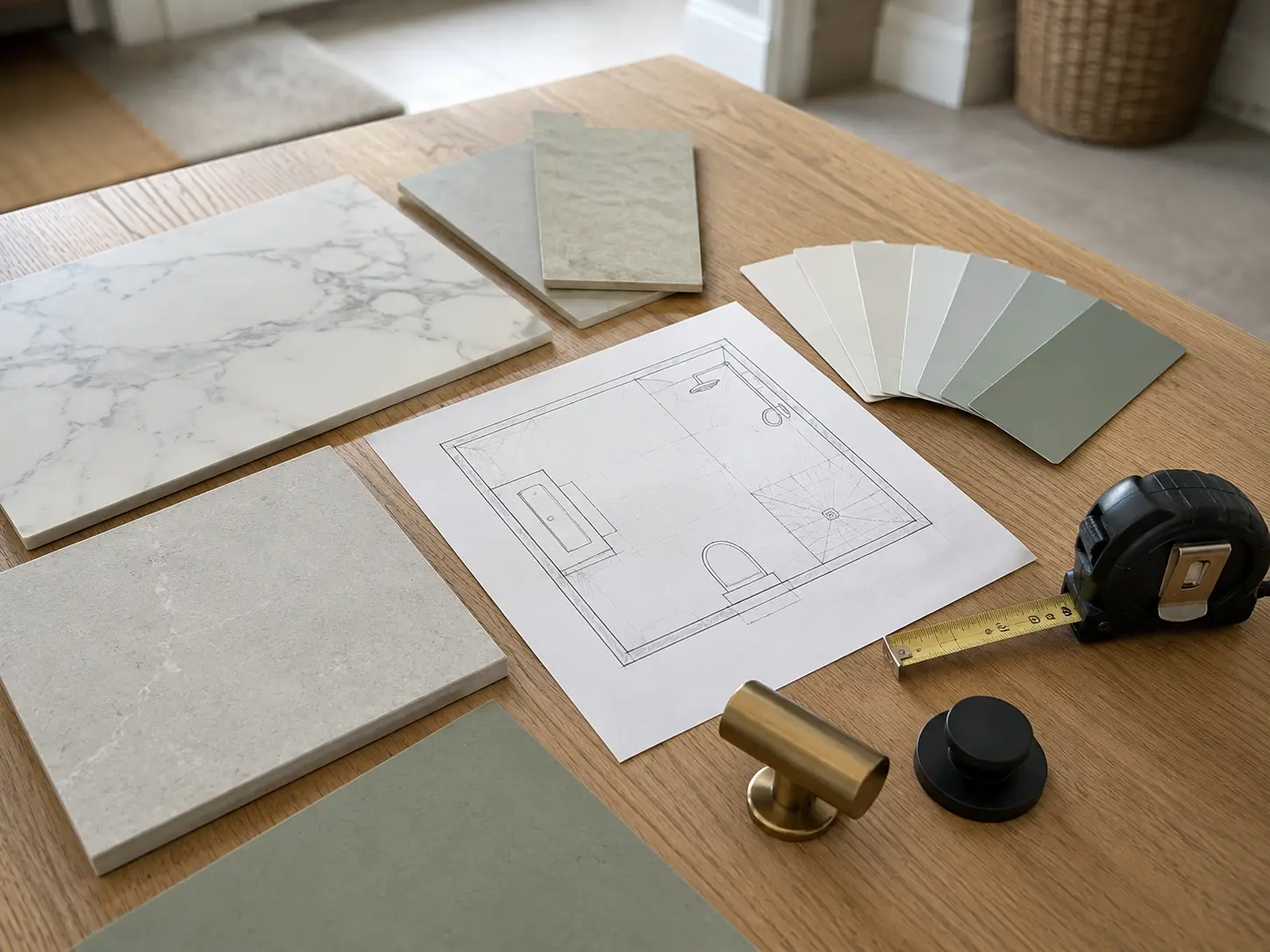
Measure the room and the space around fittings
The available floor space is only part of the plan. Doors, drawers, shower screens and cupboards all need room when open. Check standing space at the basin and the route to the toilet. Existing pipes and the waste connection can affect which positions are practical. Rough measurements can help the first enquiry, but the final layout needs a room visit before products are ordered. Ask how proposed changes improve the room and what extra work they require, especially if the plan moves the bath, shower or toilet.
Choose what will stay and what will go
You may want a complete replacement or hope to keep a sound bath, toilet or floor. Tell the installer at the outset so those items can be checked for condition and suitability. Keeping a fitting is useful only if it works with the new layout and can be connected properly. Old finishes may need removal even where a nearby product stays. Ask how the fittings you keep will be protected and what happens if damage is discovered. Record the agreed removal and replacement work in the quote rather than relying on an informal conversation.
Plan wall panels alongside the other products
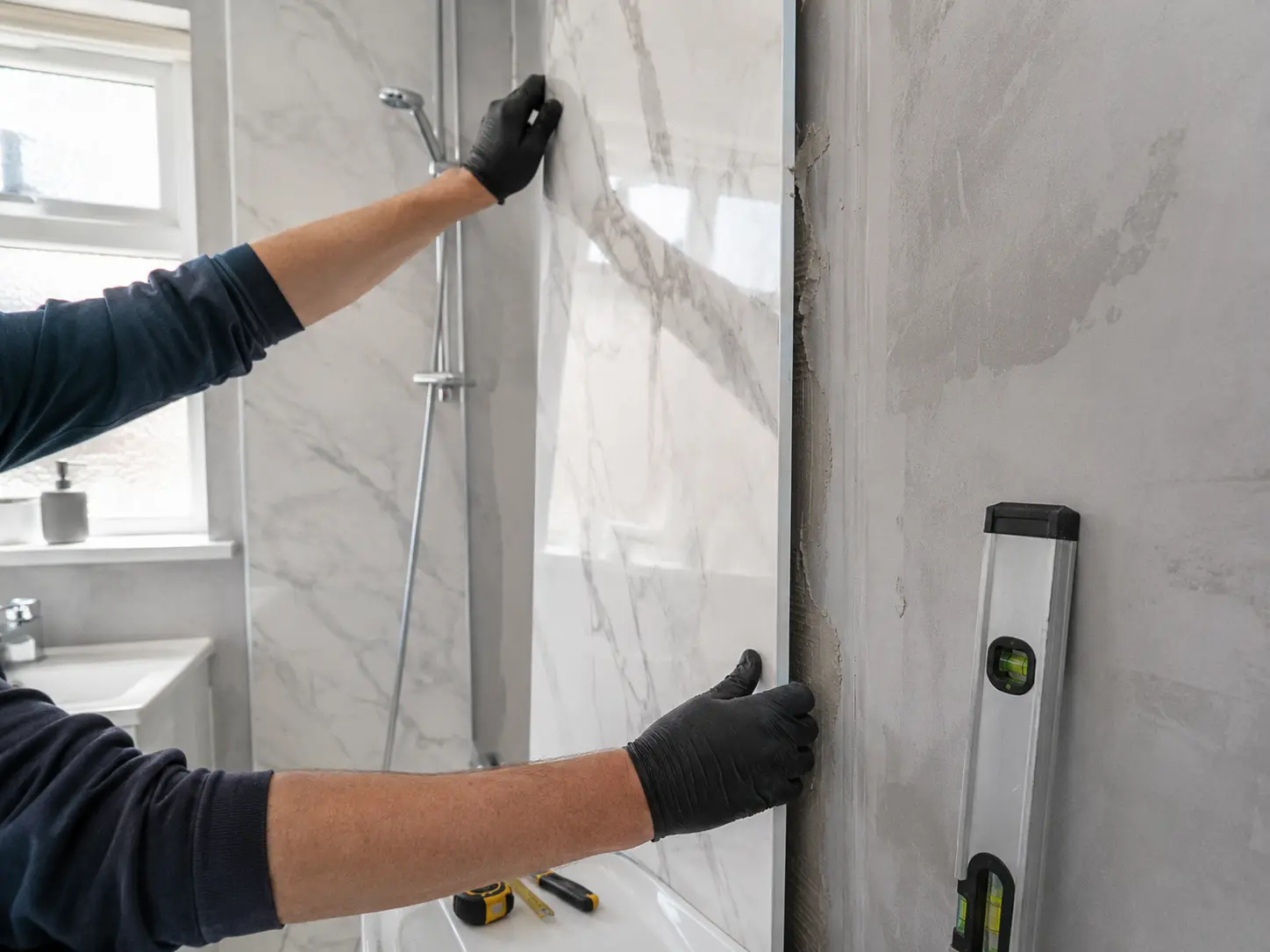
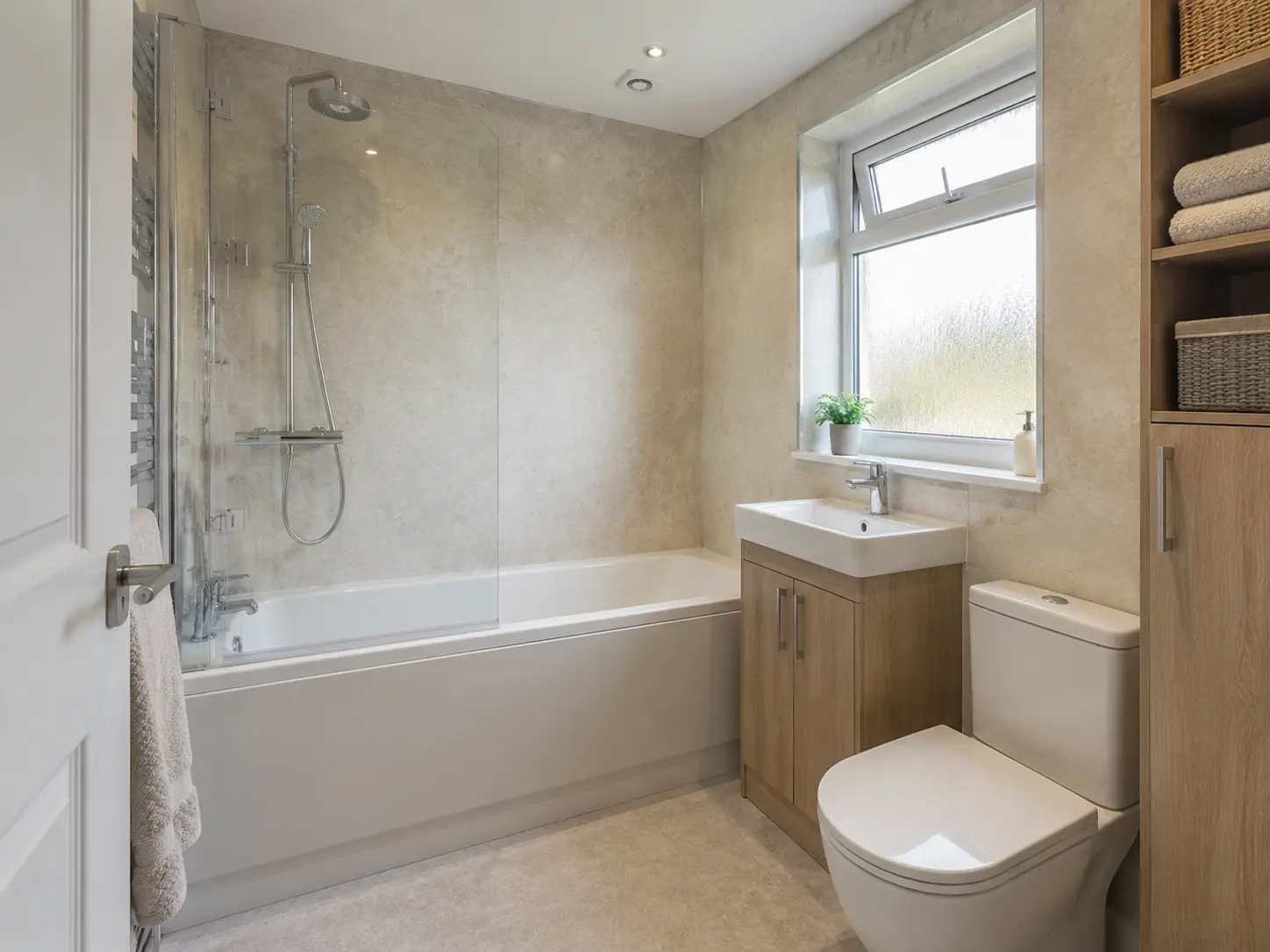
Choose the panel range with the bath or tray, screen, vanity, flooring and taps. A marble pattern, timber finish and patterned floor can compete when selected separately. Use samples together in the bathroom lighting and look at full-board patterns as well as small chips. Decide where panels stop and where another finish begins. Include window edges and boxed pipes in the discussion. Practical storage should be planned now too, because shelves, built-in wall storage and mirrors can affect the wall preparation and the openings needed in the boards.
For help with your room, see our Full Bathroom Renovations with Wet Wall service.
Discuss preparation and hidden problems
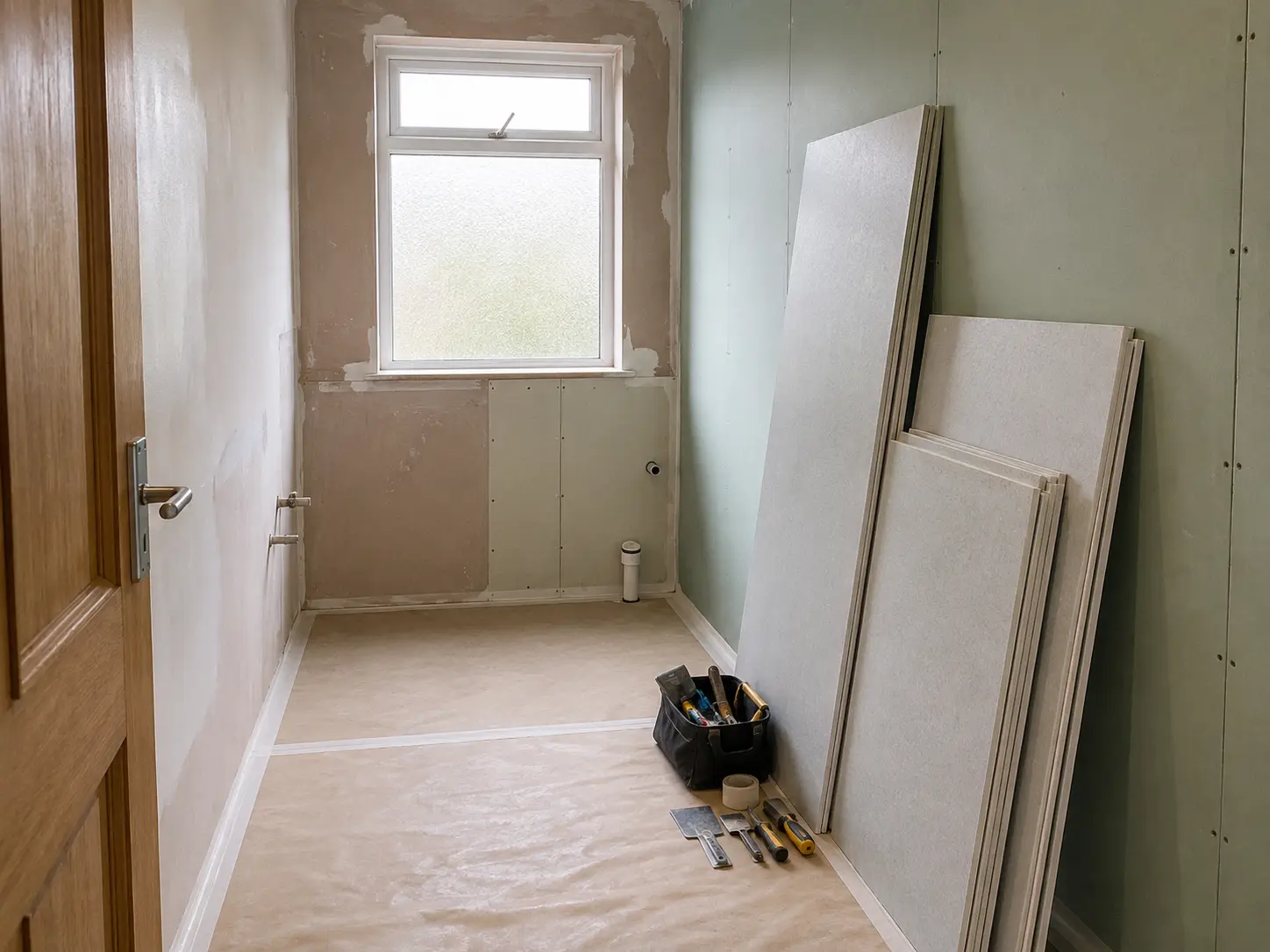
A home visit can identify visible damage, but it cannot reveal everything behind tiles or beneath old fittings. Ask what preparation is included and how additional repairs would be handled after removal. Leaks, loose surfaces and damaged material need attention before new finishes cover them. Agree that the problem and extra price will be explained before unplanned work proceeds. Keep any known history of leaks or repairs available. This helps the fitter understand the room without pretending that a fixed list of hidden defects can be ruled out before work begins.
Agree a useful written quote
The quote should name the products and fitting work, including removal, preparation, plumbing changes, wall finishes, flooring and final sealing where applicable. Check lighting, ventilation, electrical work and waste disposal rather than assuming they are included. Ask which items you need to supply and what happens if a selected product is unavailable. Compare quotes using the same layout and product list. A lower total is difficult to judge when one price includes a complete bathroom and another leaves important preparation or finishing for someone else to arrange.
Prepare for deliveries and disruption
Tell the team about stairs, parking, shared entrances and any restrictions affecting delivery. Large panels and furniture need a clear route to the bathroom. Agree where materials will be stored and how floors and shared areas will be protected. If it is the only bathroom, ask when each facility will be unavailable and discuss practical alternatives before the starting date. Drying and product availability can affect the schedule. An expected timetable should explain the order of work without making a promise that unknown repairs cannot change it.
Check the room before accepting completion
Walk through the bathroom with the installer and use the controls, doors and drawers as intended. Look at visible joints, edges and finishing around the window, bath and shower. Ask when water can be used after sealing and what cleaning methods are suitable. Keep a written note of anything still to be completed and the agreed follow-up. Receive the product names, care guidance and any warranty documents. Those records are useful for maintenance later and help distinguish a fitting issue from a product question if something changes.
Make your Hamilton enquiry specific
Send your postcode, the bathroom type and the main changes you want. Say whether it is a family bathroom, en-suite or shower room, and mention leaks or difficult access. A few photographs and preferred styles can make the first discussion easier, but you do not need a finished design before contacting the team. Request a home visit to check the room and develop the product and fitting quote. Wait for the appointment and date to be confirmed rather than treating the enquiry form as an instant booking.