Start with the finish and care you want
Wet wall panels and tiles can both finish a bathroom successfully when the product and installation suit the room. The main differences you notice each day are the pattern, joints, surface feel and cleaning. Panels cover larger areas with fewer separate joins. Tiles allow many shapes and layouts but have individual joints between them. Neither option removes the need for good preparation or careful sealing around fittings. Compare the complete installed finish, rather than assuming one material is always cheaper, easier or better for every bathroom.
Compare the appearance at room size
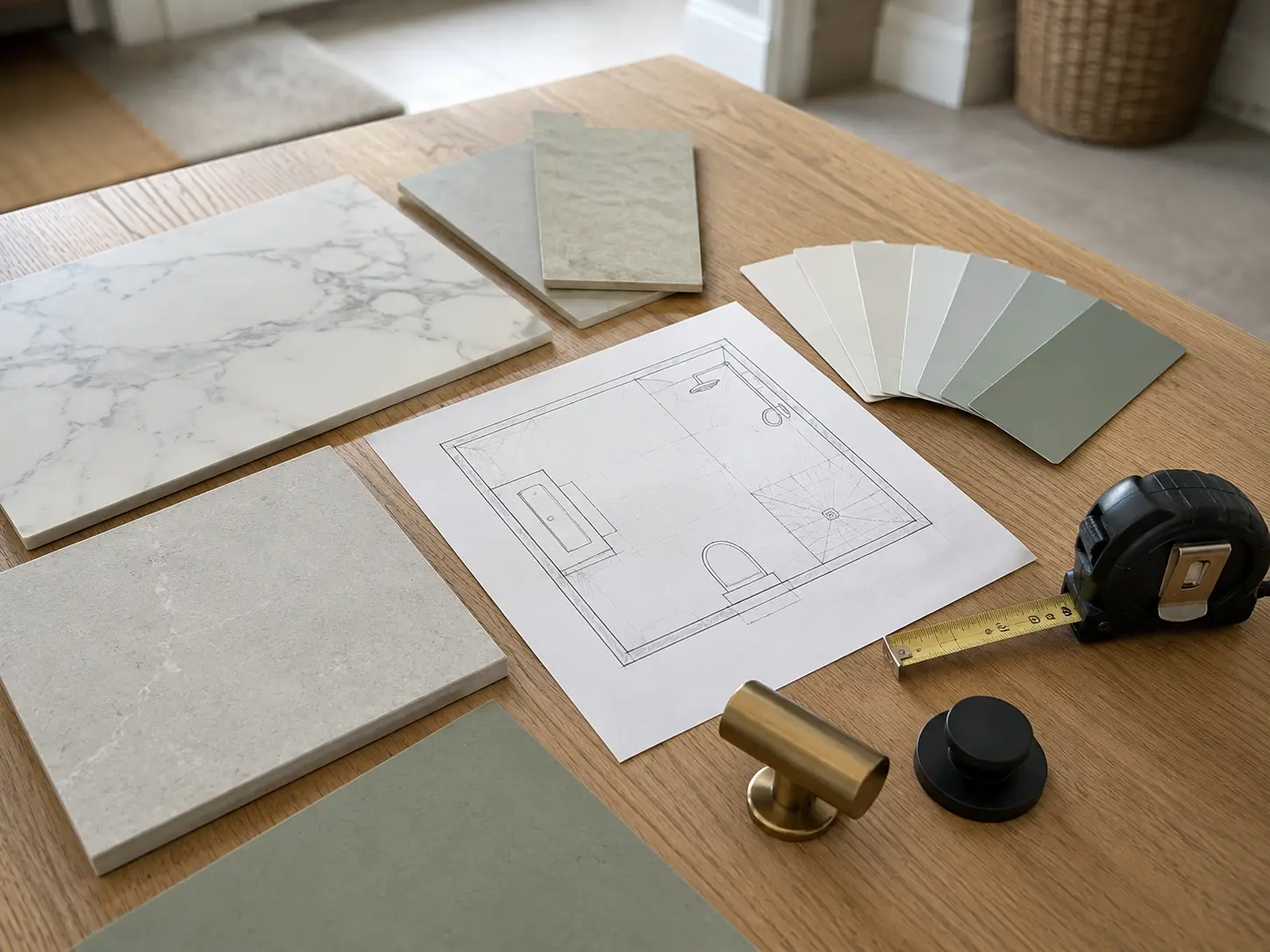
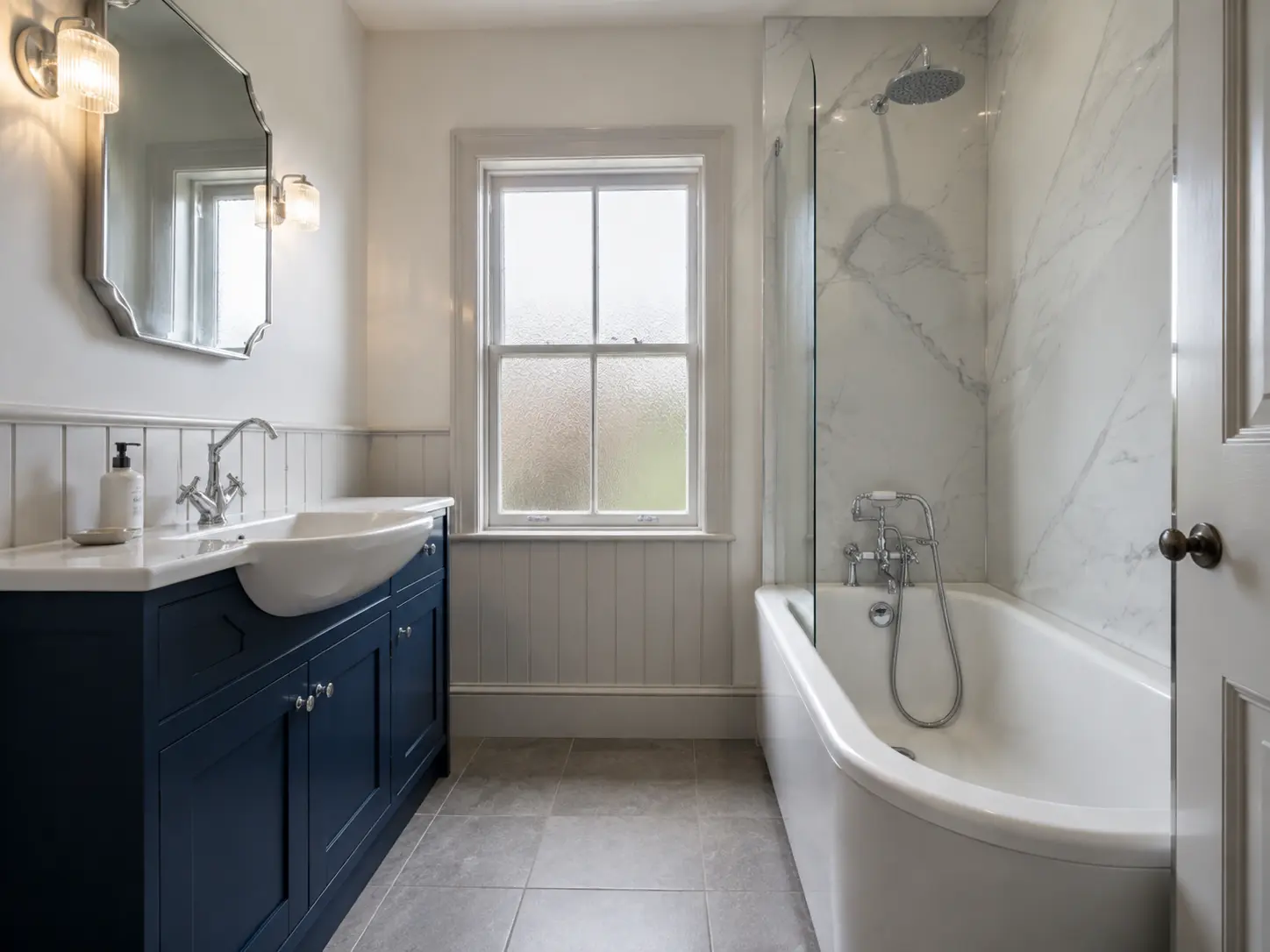
A tiled wall can use small squares, rectangular tiles or larger pieces arranged in different ways. Panel ranges often reproduce stone, marble, timber or tile patterns on broad boards. A printed tile pattern is different from separate ceramic tiles, even if a photograph looks similar. Ask to see the actual surface and the full pattern before ordering. Check how the design will finish beside the window, shower controls and corners. A sample that looks attractive by itself still needs to work with the flooring, furniture and the amount of visible wall.
Think about the joints you will clean
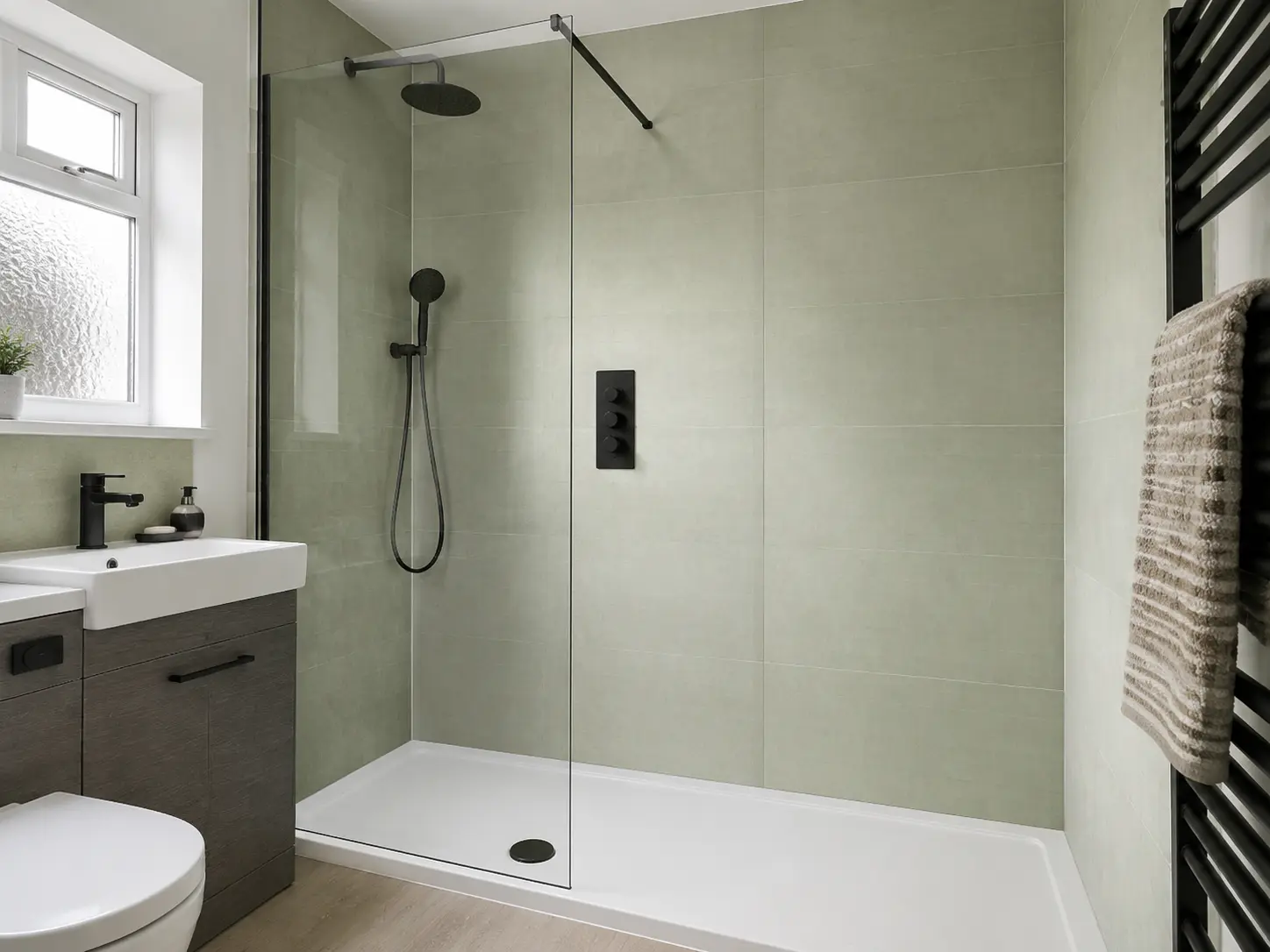
A panel wall usually has fewer joints than a wall covered in smaller tiles. That can make routine wiping simpler, especially around a shower. Tiled walls have grout between the tiles and sealant at relevant changes of surface. Panels still need care at their joins, corners and edges, so they should not be described as maintenance-free. Follow the chosen product's instructions for cleaning. If you dislike cleaning around many small grout joints, include that in the decision rather than choosing a finish only for its appearance in a showroom.
The wall behind the finish still matters
Neither tiles nor panels should be used to hide a damp or unstable surface. The installer needs to establish what preparation is required and how the wet area will be protected. Existing tiles may sometimes provide a suitable base for a particular panel system, but loose tiles or unexplained staining need attention first. Removing old finishes can reveal work that was not visible during the initial visit. Ask how repairs would be explained and priced. The preparation part of a quote can matter as much as the choice of visible finish.
For help with your room, see our Wet Wall Panels in Hamilton for Showers and Bathrooms service.
Look at corners, shelves and plumbing openings
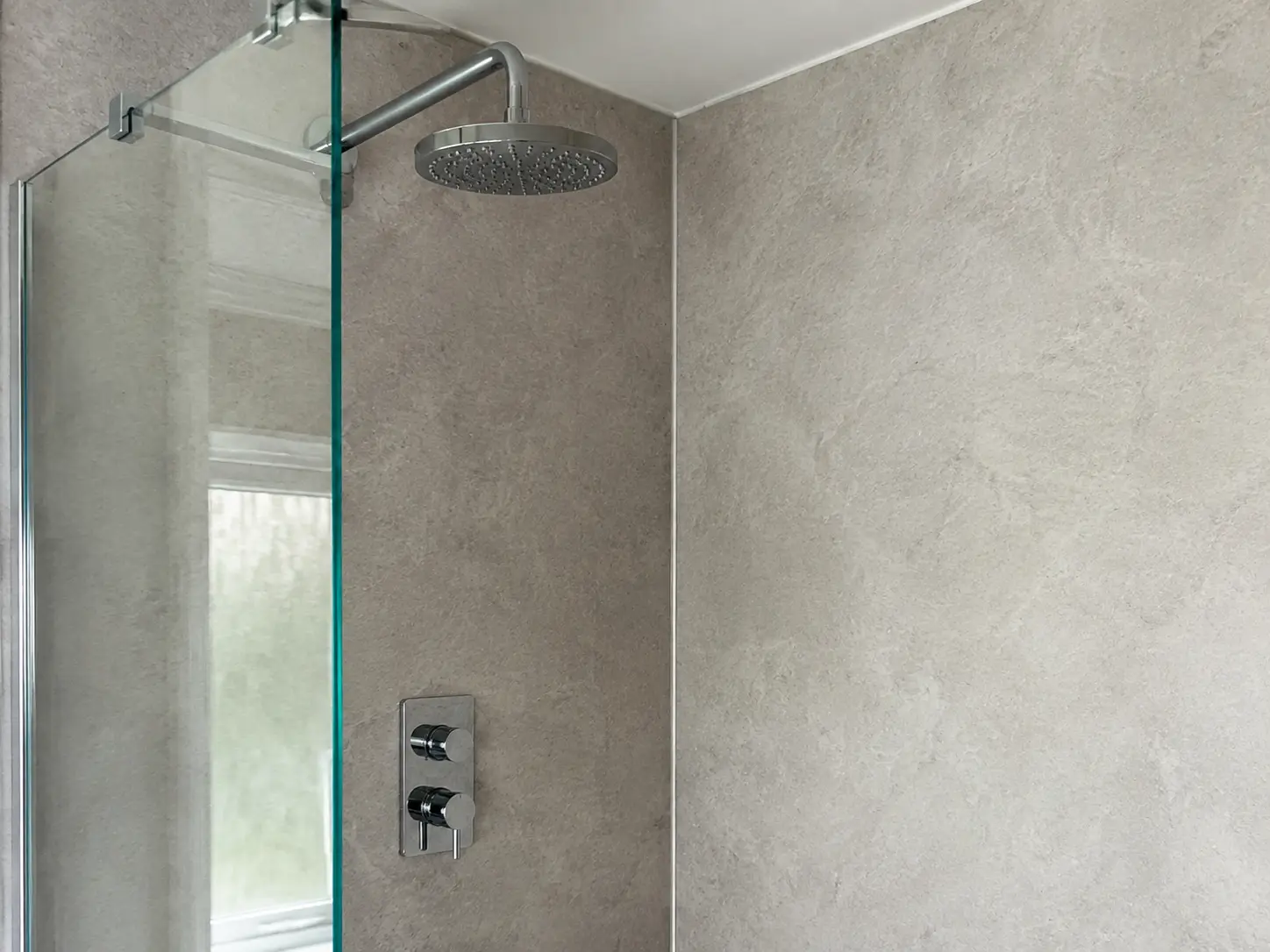
A bathroom wall is rarely an uninterrupted rectangle. Screens, taps, shelves and windows create edges and openings that must be finished correctly. Panels have their own joining and trim details; tiled walls have their own cuts and finishing pieces. Ask to see how these details will work around your fittings. If you want a recessed shelf, discuss its construction before choosing the surface. A narrow strip beside a window or a poorly planned corner can be more noticeable than the main pattern, so include those areas in the design conversation.
Ask what a future repair would involve
Damage to one tile may sometimes be repaired locally if a matching spare exists and the underlying problem is addressed. A damaged panel can involve replacing a larger piece and disturbing nearby trims or fittings. The answer depends on the installed system, so ask before purchasing. Keep spare material where practical, plus the product reference and colour details. A similar name from a later range may not match exactly. Access to hidden pipe connections also matters: the wall finish should not make an expected maintenance task unnecessarily difficult.
Compare complete installation prices
Avoid comparing a tile price per square metre with the price of one panel and treating the difference as the total saving. Include preparation, adhesive, joints, trims, cutting, labour, removal and finishing. The wall layout and product instructions affect the work involved. A small complicated shower can take more preparation than its floor size suggests. Ask for both options against the same measured room and fitting list. If one quote excludes plumbing alterations or disposal, add those missing costs before deciding which provides the better fit for your budget.
You can use different finishes in one room
The choice does not have to cover every wall. Panels might suit the shower while sound painted walls remain elsewhere. Tiles may be used on the floor with wall panels above, provided each product is suitable for its position and the joins are planned. Keep the number of strong patterns manageable and compare samples together. For your Hamilton bathroom, explain how you use the room and which cleaning or layout problems you want to solve. The fitting discussion can then compare practical options instead of forcing the same finish everywhere.
Ask when the room can be used
Whichever finish you choose, the installer should explain the drying or curing time for the products used and when showering can resume. The work is not necessarily ready for water as soon as the last board or tile is in place. Confirm the expected bathroom downtime before the start date, particularly if there is no second shower. Keep the cleaning and aftercare instructions for the selected finish rather than applying the routine from the old bathroom.