Decide where the panels will go
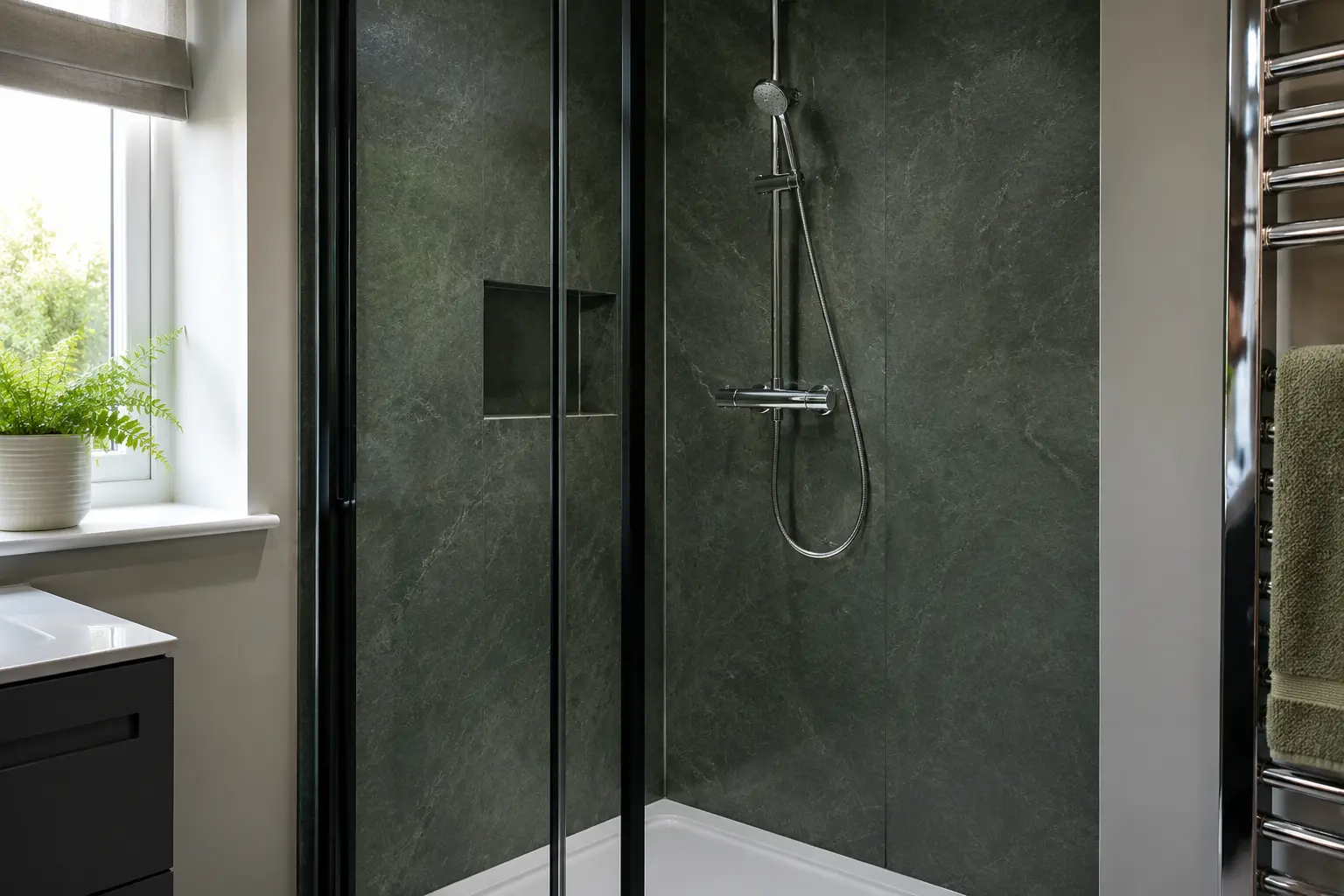
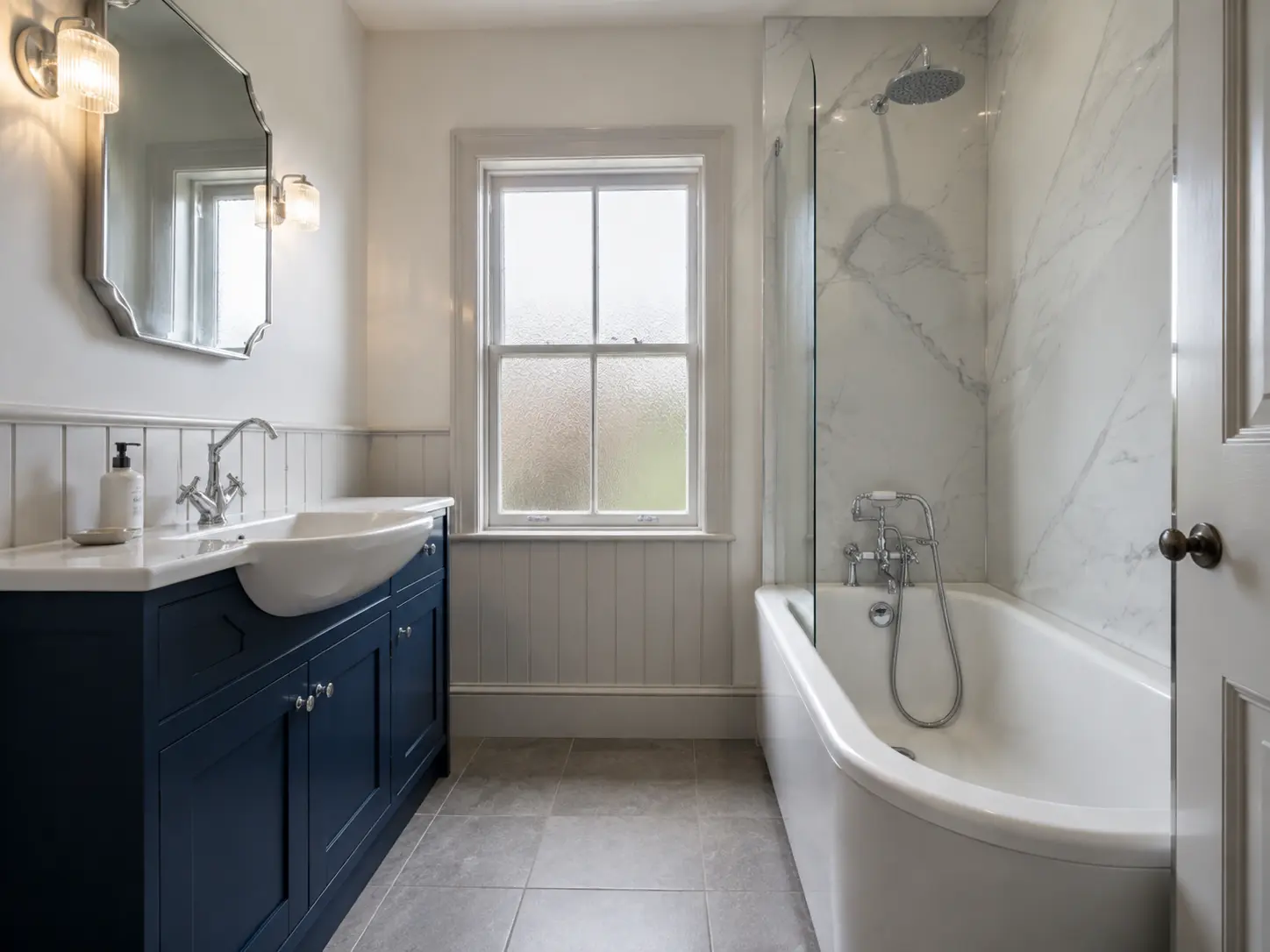
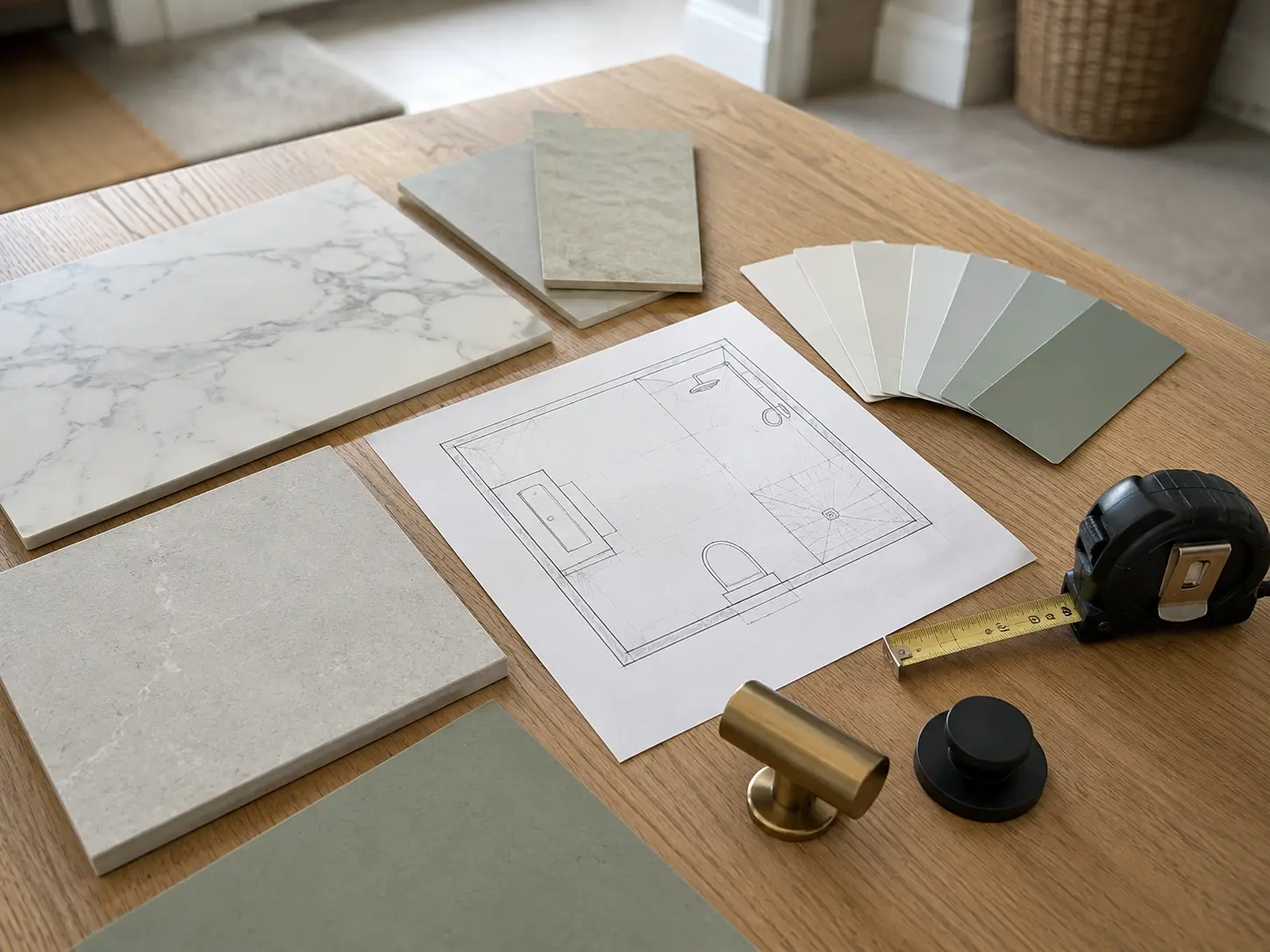
Before looking at colours, list the walls you want to cover. A shower surround, bath wall and full bathroom have different edges and quantities to plan. Mark the window, door, basin and anything fixed to the walls. Decide which fittings will stay and which are being replaced. That gives the installer a useful starting point for board sizes and joins. Keep photographs for the first conversation, but do not order from rough measurements alone. The final layout needs an accurate room check and the instructions for the chosen panel range.
Check that the product suits the position
A wall covering advertised for interiors is not necessarily designed for direct shower spray. Check the exact range and the manufacturer's description of its intended use. The construction and joining system matter as well as the printed face. Ask how the product is fitted around a bath or tray and what happens at exposed edges. Keep the product name in the quote rather than accepting a description such as 'premium waterproof boards'. That allows you to check the care information and compare the actual product being offered by different suppliers.
See more than a small colour chip
Samples are useful for feeling the surface and comparing colours. They may not show the full grain, veins or repeated tile pattern. Ask for a view of a complete board and, where possible, adjoining boards. Think about which part of that pattern will be visible after the vanity, mirror and shower screen are fitted. A large dramatic vein may be lost behind furniture or cut at an awkward point. A simpler pattern may work better where only narrow strips of wall remain visible around the fittings.
Compare the finish in your own lighting
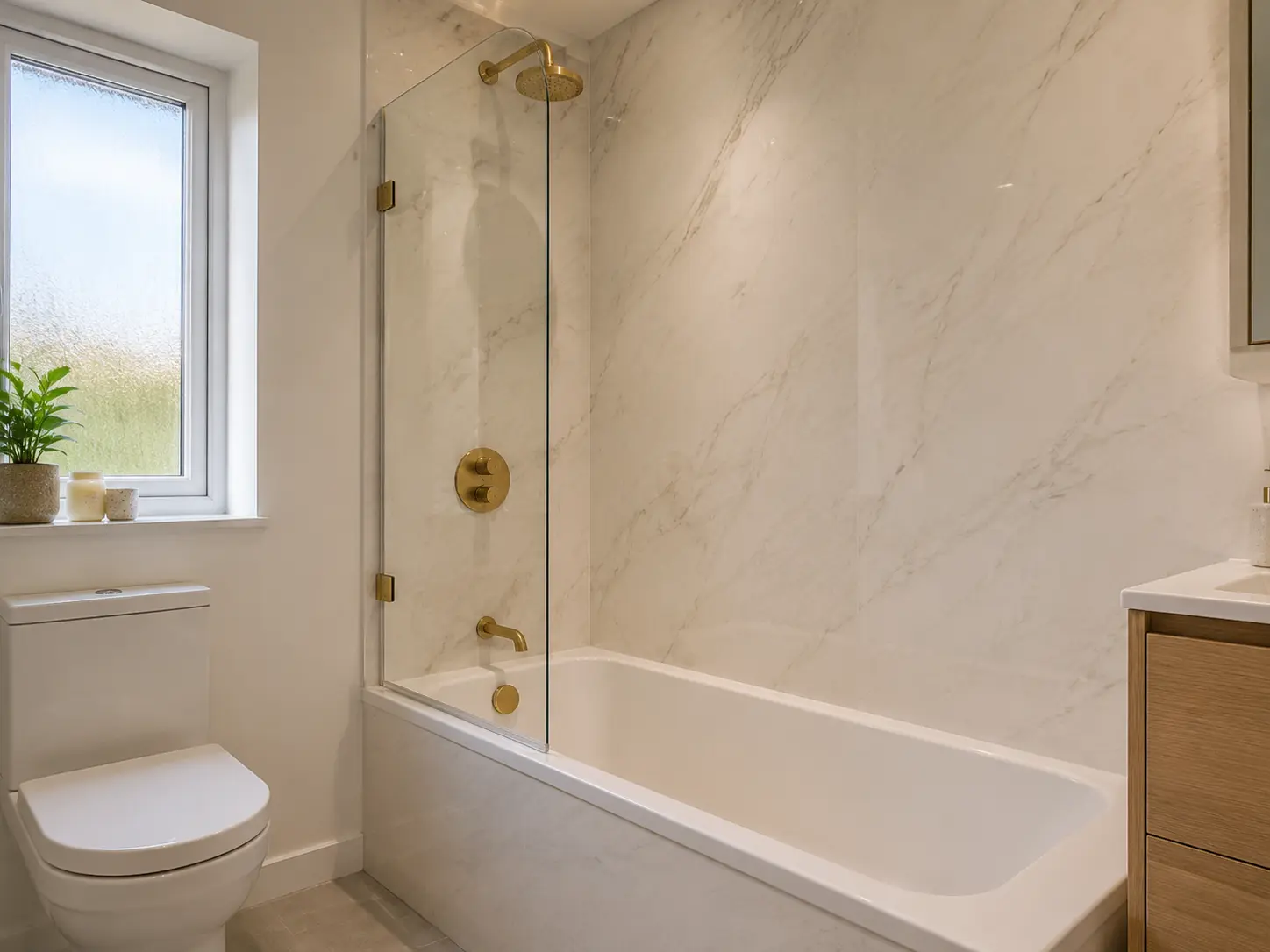
Take the sample into the bathroom and place it vertically where it will be used. View it in daylight and under the lights you normally switch on. Gloss may reflect fittings and windows more strongly than a matt finish, while texture changes how light falls across a surface. Put the floor and furniture samples beside it rather than deciding on each in isolation. A colour that looks neutral on a website may appear warmer or cooler in the room. Photographs help record options, but the physical sample remains useful.
For help with your room, see our Wet Wall Panels in Hamilton for Showers and Bathrooms service.
Look closely at the joining details
Ask to see the panel edges and the trims that will be used at corners and around openings. Some systems join boards with shaped edges; others use visible joining strips. The finished joint can be as important visually as the main pattern. Check whether the trim colour matches the taps or deliberately differs. A full-room installation needs planned stops beside doors, ceilings and other wall finishes. These are real parts of the installation, so include them in the quote before deciding that one sample is the right choice.
Choose with cleaning in mind
Read the care guide before committing to a textured or strongly coloured panel. A surface can be easy to wipe while still needing a particular cleaner and soft cloth. Avoid assuming that a tough-looking stone effect tolerates abrasive pads or every limescale product. Dark finishes may show water marks differently from pale ones. Think about the cleaning routine you are comfortable keeping up, including edges beside the bath and fittings. Ask how seals should be checked and where product information will be provided after installation.
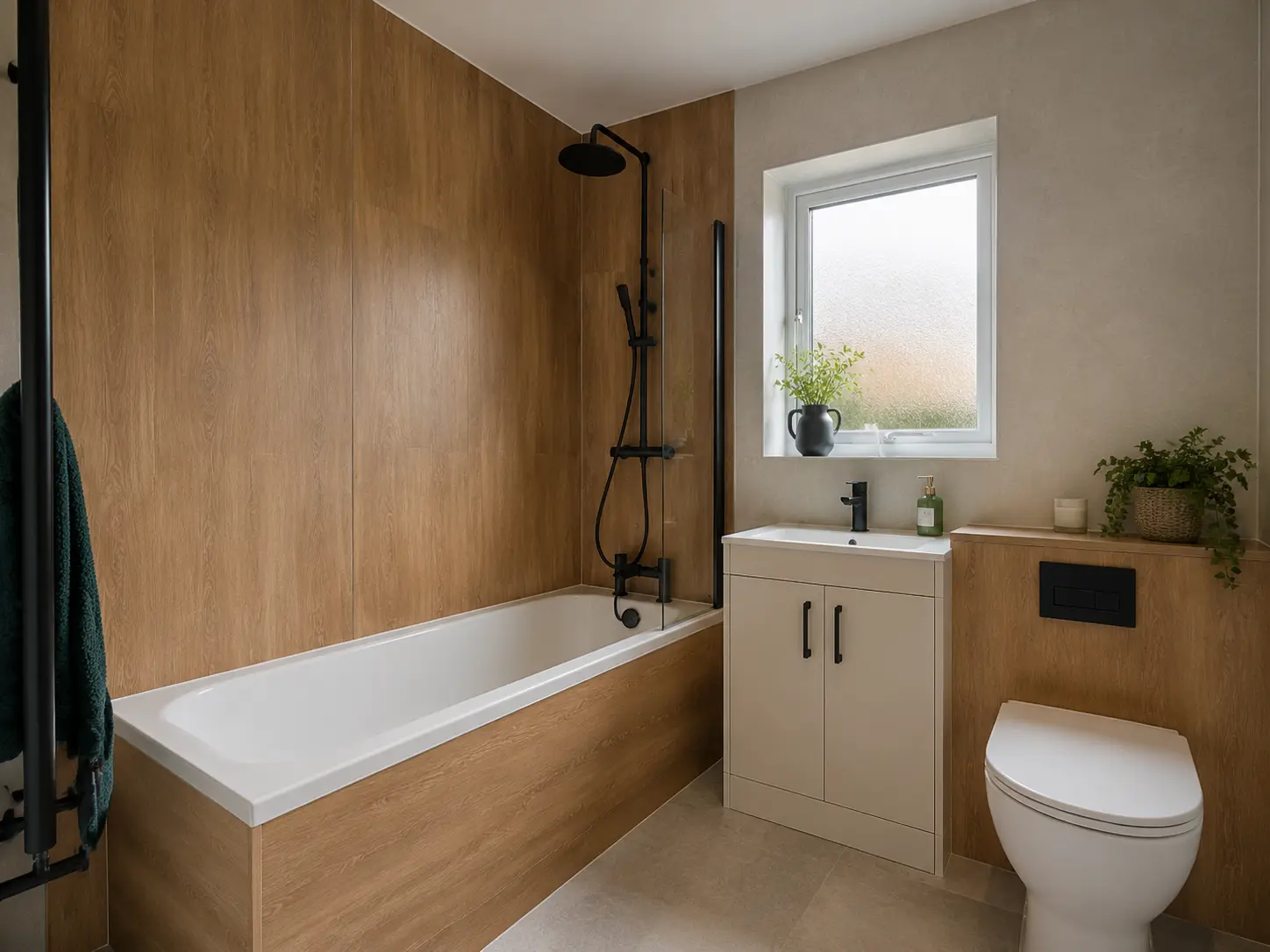
Check delivery and access before ordering
A board that fits the wall may be awkward to get through the building. Stairs, tight turns, low landings and the bathroom doorway need measuring alongside the room itself. Tell the supplier or fitter about access before delivery is arranged. Ask where boards can be stored safely and whether the product needs any preparation before fitting. Do not assume a larger board is always better: the practical layout and handling may favour another size. Product choices are easier to change while they are still samples rather than delivered materials.
Keep fittings and panel choices together
The position of screens, controls, mirrors and shelves affects cuts and fixing points. Decide on useful storage before the boards are installed. A shelf fixed afterwards can need a new opening and proper sealing; a recessed shelf requires planning within the wall. If support rails or a shower seat are needed, their fixings must suit the structure behind the panels. Make sure these items appear in the same fitting discussion. A bathroom should be comfortable to use and maintain after the photographs of the new finish have been taken.
Record the final selection clearly
Once you have chosen, ask for the make, range, colour, board size, trims and agreed coverage in writing. Note which sample the choice refers to and confirm any product substitutions before they are ordered. Keep a copy of the fitting and cleaning information with your quote. Send your Hamilton postcode and explain whether you need a shower surround or a full bathroom when requesting a visit. The installer can then check the room and give a price for the selected system and the work it actually needs.