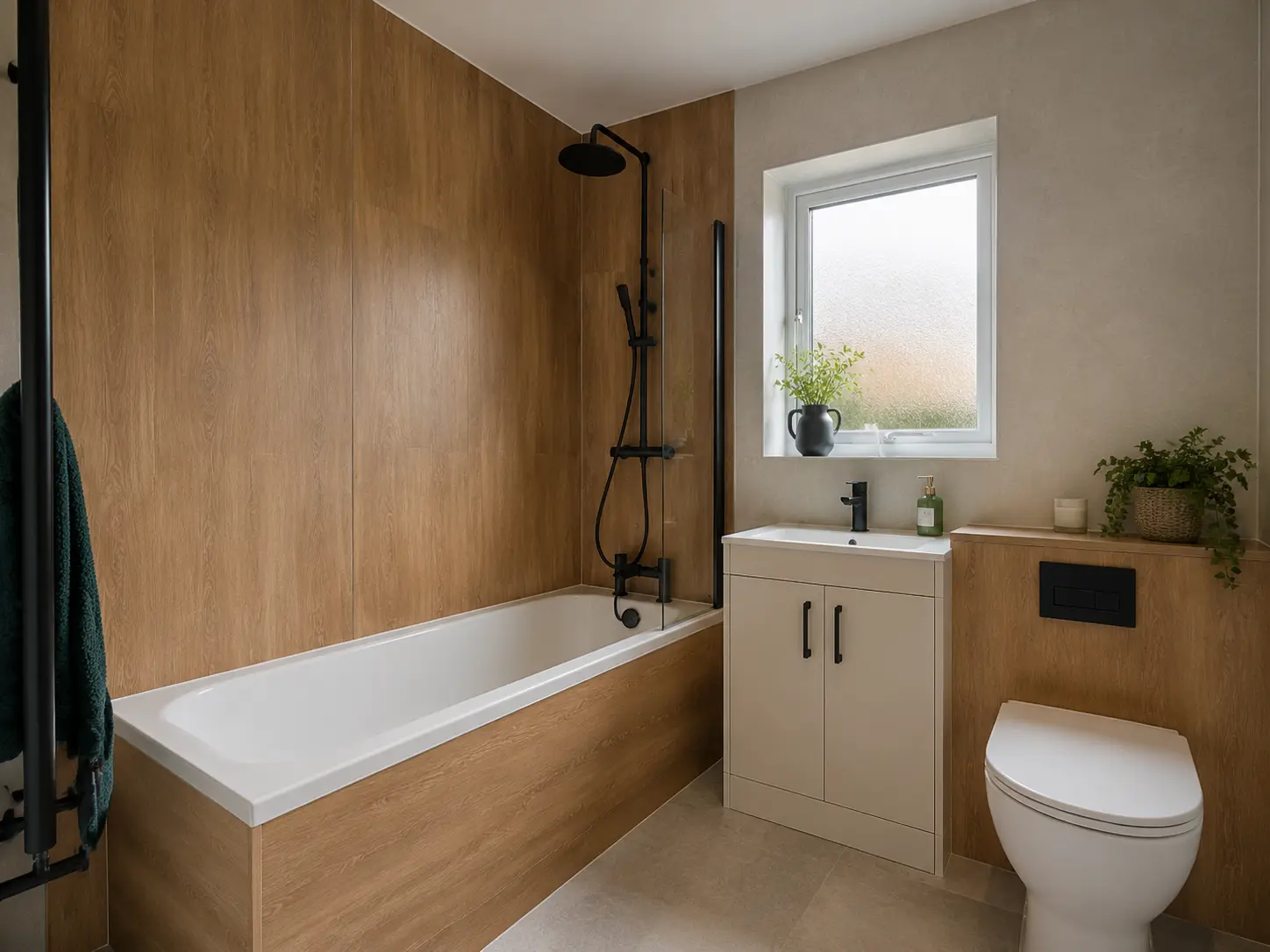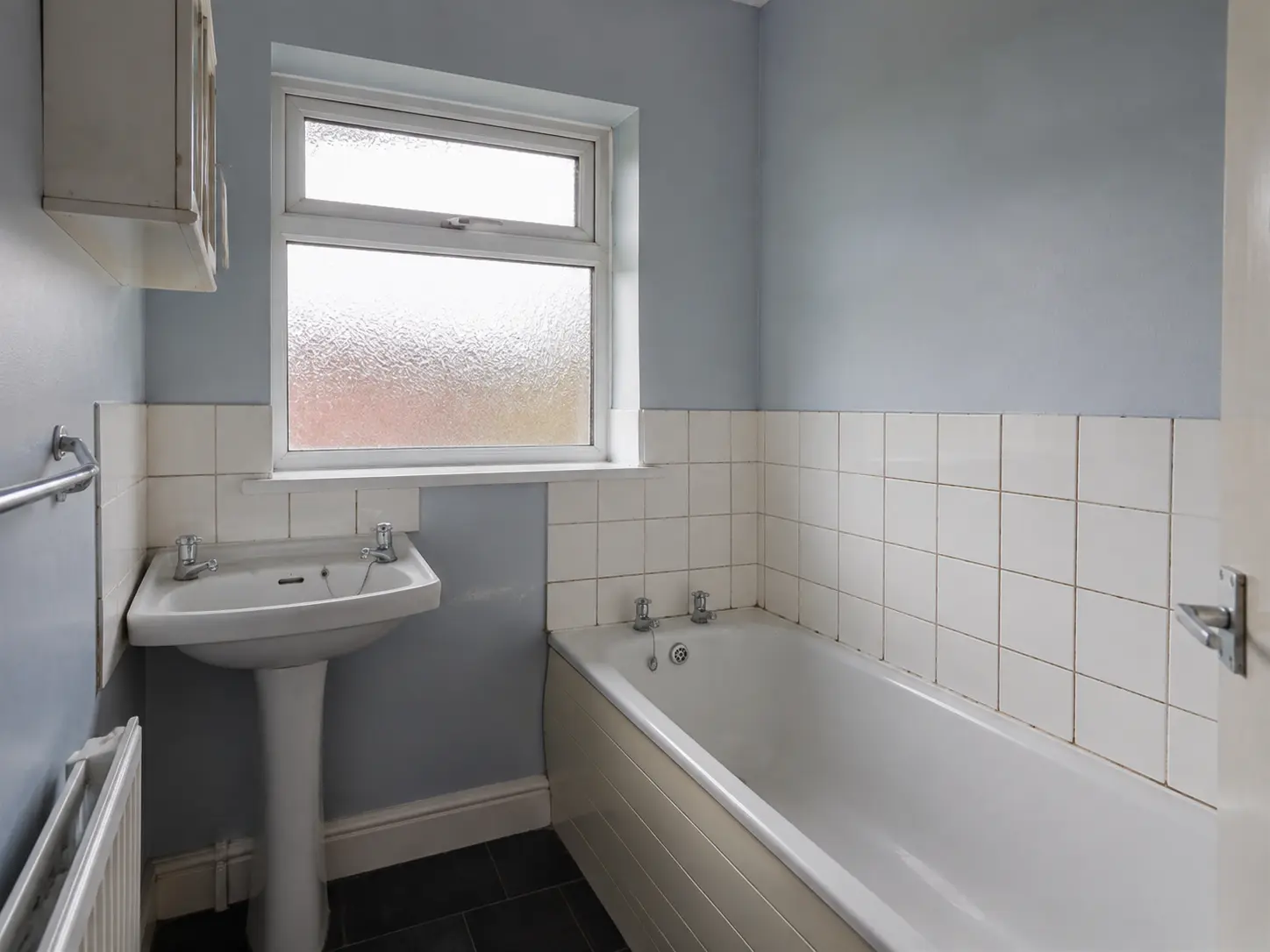
Sometimes, after the tiles have been checked
Some bathroom panel systems can be installed over existing tiles when the tiles and supporting wall are sound and the manufacturer's fitting instructions allow it. That is a conditional answer, not a reason to cover any tiled surface. The installer needs to check the wall, the existing finish and the proposed panel system together. Loose tiles, movement or unexplained damp must be dealt with first. A photograph can show the appearance, but it cannot confirm how firmly tiles are attached or what is happening behind them.
Find out why the current finish is being replaced
Tell the fitter whether you want a different look or whether the wall has a problem. Cracked grout, a persistent stain, a musty smell or movement beside the bath need investigation rather than a new surface placed over them. A leak can come from plumbing or a failed join and may have affected material behind the tiles. Covering the visible mark does not fix its cause. Explain when the problem appears and whether anything has already been repaired so the inspection starts with useful information.
Check that the old surface can support the work
The existing tiles and the material behind them must be suitable for the installation. An installer may need to investigate areas that sound or feel loose and inspect damaged corners or edges. The required preparation is specific to the chosen panel system. Ask what is being checked and which repairs are included in the price. Where too much of the old finish is unreliable, removal may be a better option than trying to keep it. The decision should follow the wall condition, not simply the wish to avoid mess.
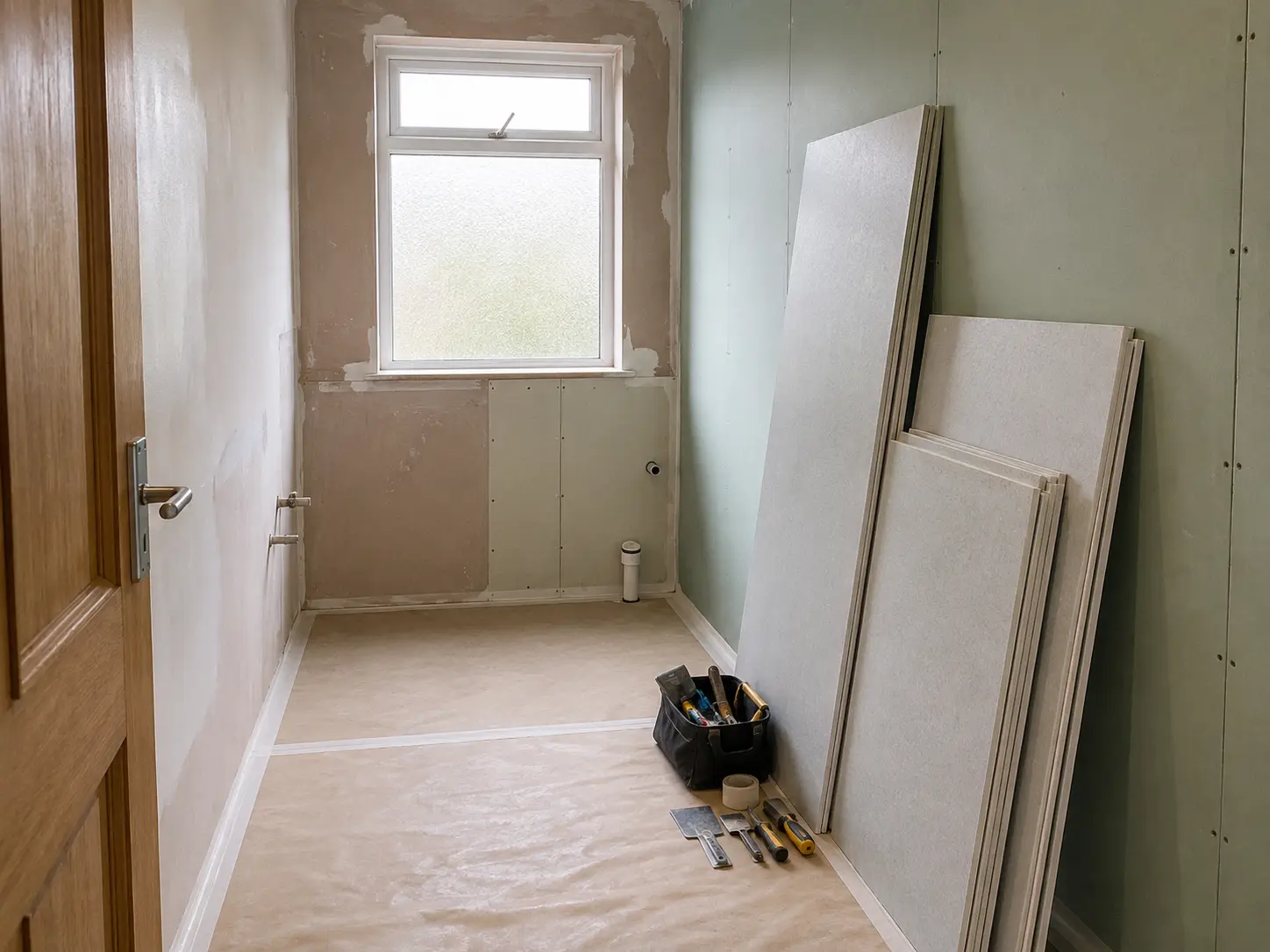
Allow for the extra wall thickness
Keeping tiles adds the new panel system in front of the existing surface. That changes the finished position around taps, shower controls, screens, window openings and the bath or tray. Check that fittings can still be connected and operated properly. A small extra thickness can matter beside a narrow shower entrance or a tightly fitted cabinet. Ask the installer to explain the edges and connections before work begins. A flat section of wall may be straightforward while the surrounding details make the overall job unsuitable for fitting over tiles.
For help with your room, see our Wet Wall Installation service.
Plan what happens at the bath or tray
The lower edge of the wall finish needs to work with the bath or shower tray and the selected sealing system. The installer should check the stability and condition of the fitting as well as the tiles above it. If the tray moves or the bath edge is damaged, new panels alone will not solve the problem. Ask whether the fitting will remain, be removed temporarily or be replaced. Include that work in the quote rather than discovering late that the advertised panel installation assumed a different arrangement.
Compare the two complete options
Ask for an explanation of keeping the tiles versus removing them. Keeping a suitable surface may avoid some removal and waste, but it can add work around edges and fittings. Removing tiles can reveal the wall condition and allow repairs, although it may require more preparation before panels can be fitted. Compare the full work and finished result rather than only the time spent taking tiles off. A sensible choice accounts for reliable attachment, room dimensions, plumbing access and the quality of the final sealed joins.
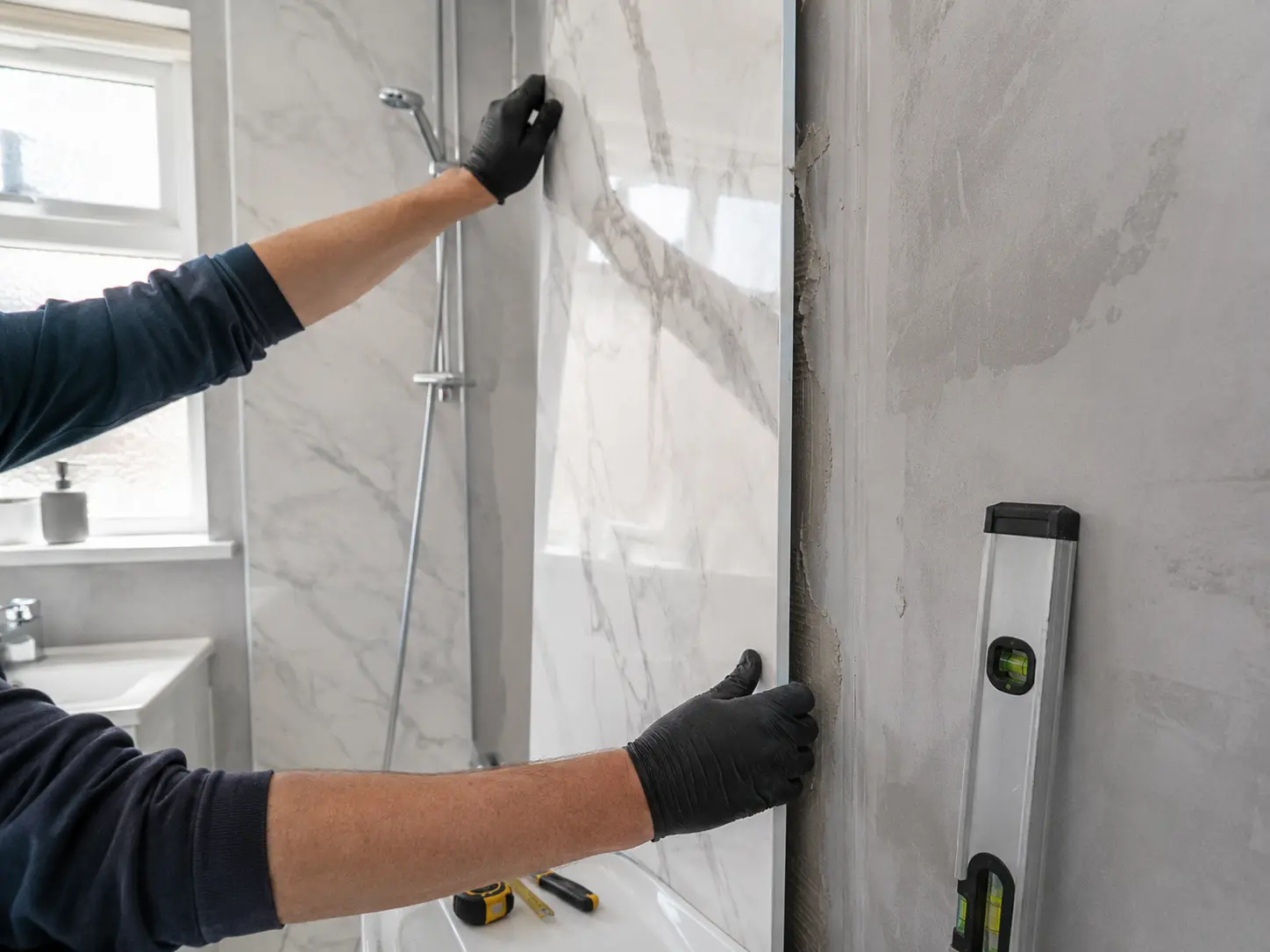
Agree how hidden damage will be handled
Even a careful first inspection has limits while the bathroom is still in use. If a test area or removal reveals damaged plaster or timber, ask for the finding to be explained before extra work goes ahead. Your written quote should distinguish known preparation from repairs that cannot yet be confirmed. Keep photographs of the exposed area where useful. Agree the additional work and price in writing so there is a shared record. Make sure the cause of the damage is dealt with before new panels cover it.
Avoid treating this as a shortcut for every bathroom
Do not choose adhesive, board thickness or sealing products from a general online example. Follow the current instructions for the exact panel range, and use an installer who can explain the proposed method. Different systems may have different requirements even when their surfaces look alike. The same caution applies to fixing shelves or screens through the new panels. Their supports and openings need planning as part of the work. Saving removal is useful only if the finished wall remains suitable, properly fitted and practical to maintain.
What to send when requesting a fitting quote
For a Hamilton enquiry, include your postcode and say that you hope to keep the existing tiles. Add photographs of the full wall, corners, bath or tray edge and any visible damage. Mention loose tiles, previous leaks and fittings that are being replaced. Do not remove fittings just to obtain photographs. The visit can check whether fitting over the tiles is realistic and what preparation is required. Wait for that assessment before ordering panels, trims or replacement shower parts for the proposed layout.