What bathroom wall panels are
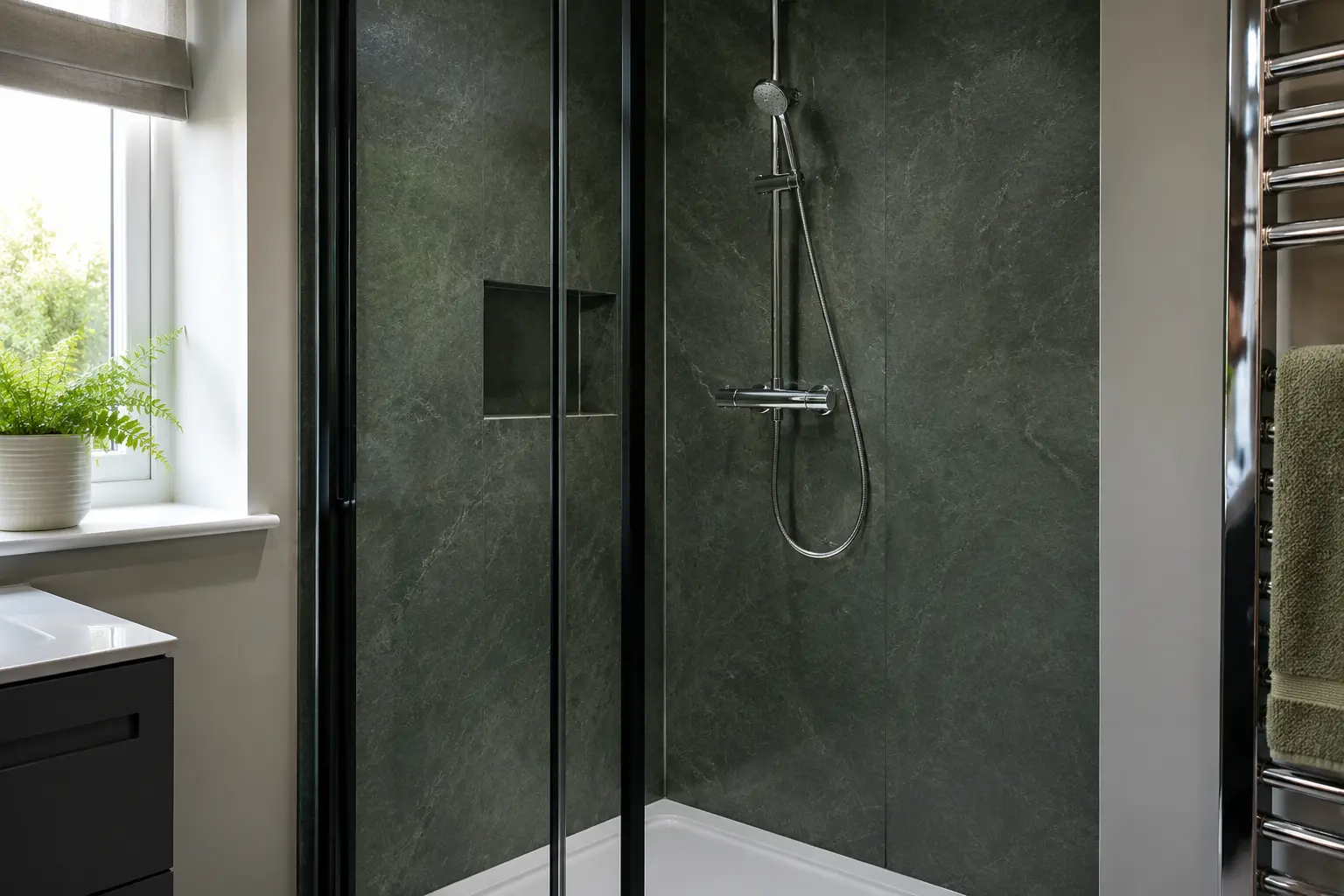
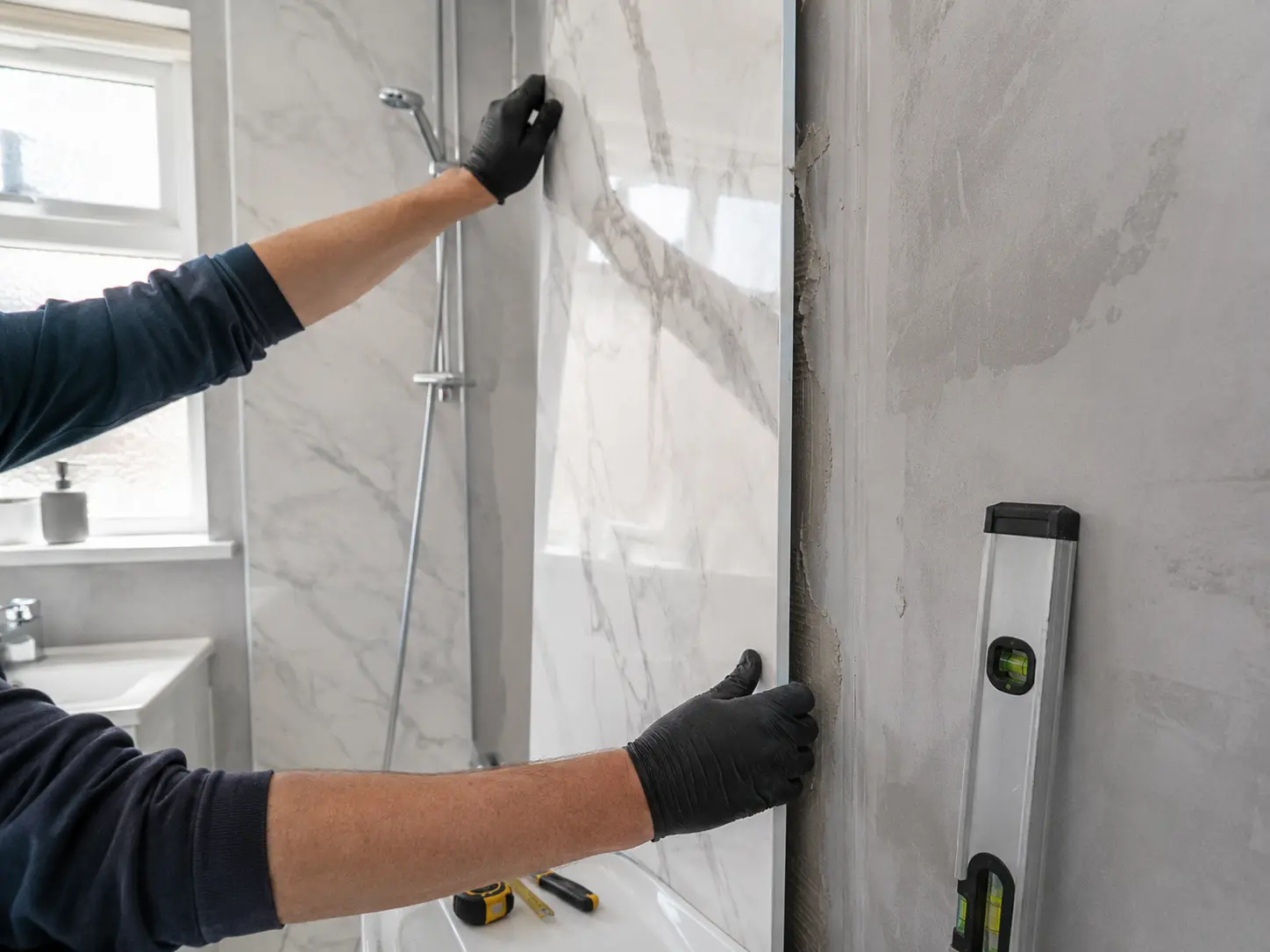
Wet wall panels are large boards used to finish bathroom walls, including areas around baths and showers when the product is suitable. They cover more wall in one piece than individual tiles. Their edges join using the system specified for that range, which may involve shaped board edges, trims and sealant. The result has fewer separate joints to clean. A panel is still only one part of the bathroom: the wall behind it, corners, openings and connection to the bath or shower tray all need proper preparation and fitting.
Choose the walls you want to cover
Start by deciding whether you need panels around the shower, beside the bath or throughout the room. Sound painted walls outside the splash area may be able to stay. Covering every wall changes the number of boards, corners and edges in the quote. Include the wall behind the basin if it gets regularly splashed. Look at doors, windows and cupboards too: a large wall measurement does not tell you where every cut or join will fall. A measured layout helps avoid buying a finish without understanding how it will fit.
Compare the complete panel system
Two samples can have a similar printed surface but different material inside. Ask for the exact brand, range and thickness in the quote, together with the matching joining and sealing products. Check that the range is intended for the position where it will be used. A decorative wall covering sold for a dry room is not automatically a shower panel. Keep the product instructions so the installer and customer are discussing the same requirements. Do not mix components just because the colours match or the packaging describes both as waterproof.
Look at patterns beyond the sample
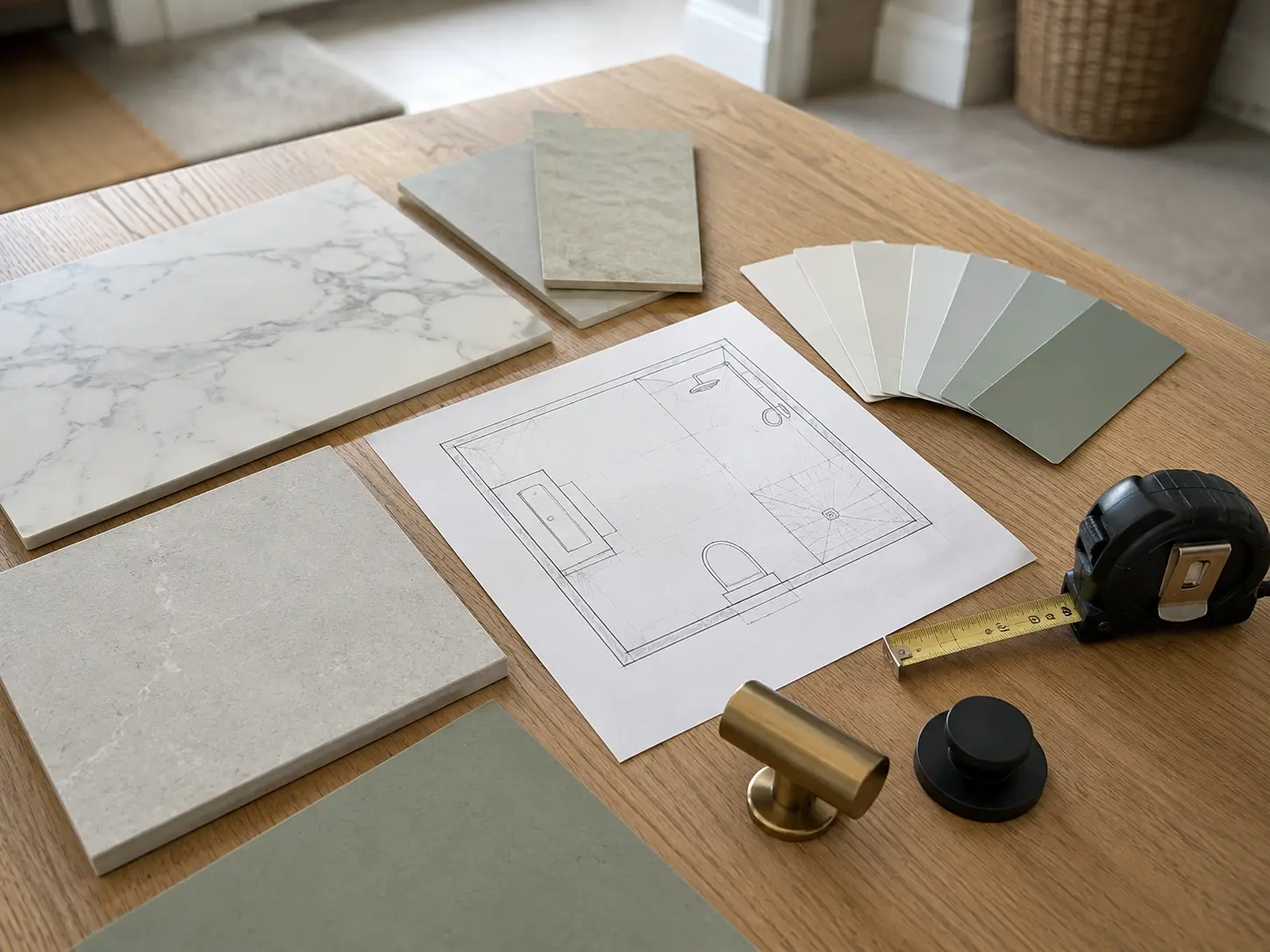
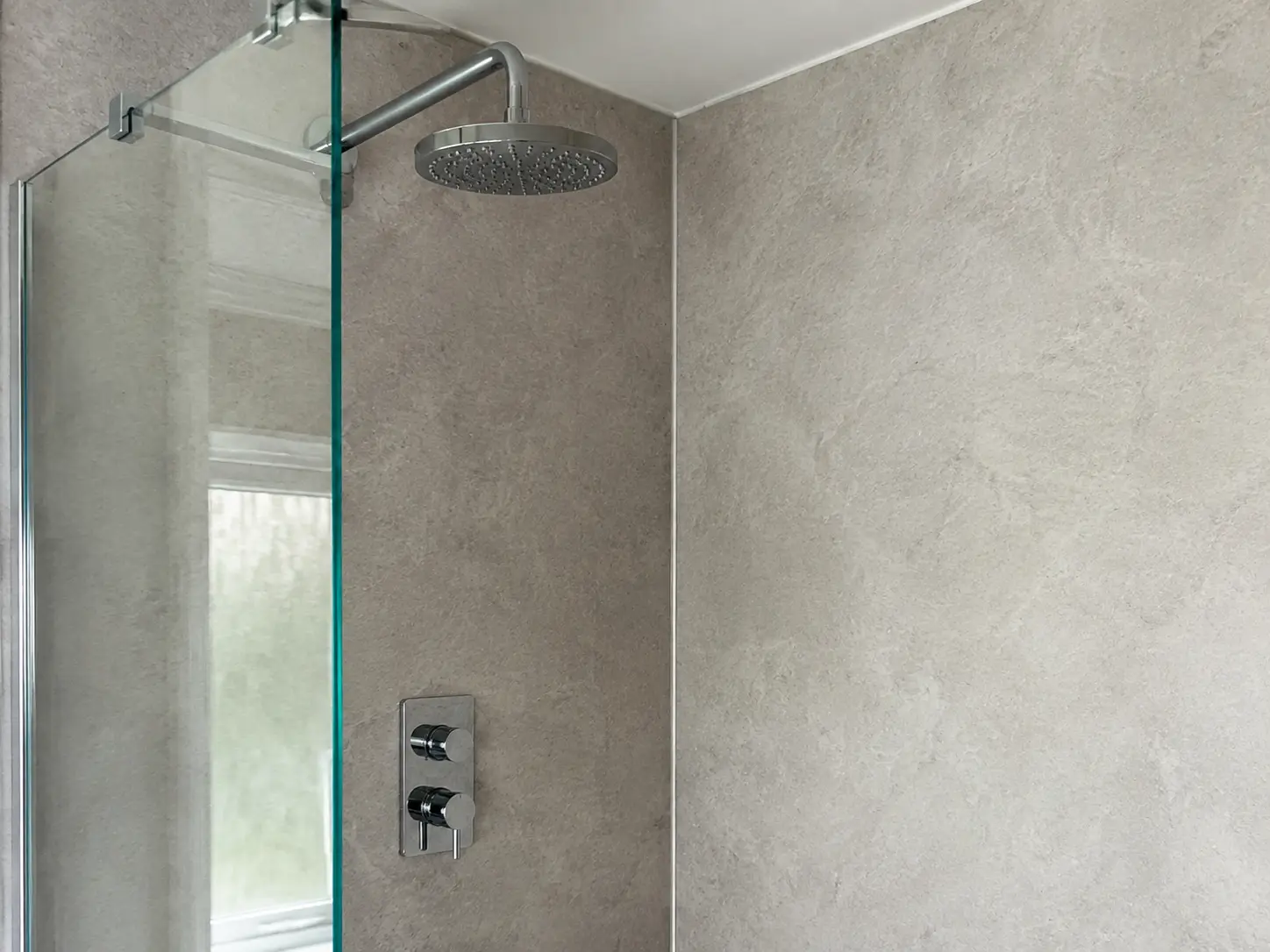
A small sample is useful for judging colour and surface feel. It may show very little of a marble vein or timber grain, so also view the full board design. Check whether patterns repeat and how adjacent panels meet. A printed tile grid needs its lines considered beside corners and windows. Place samples next to the floor and vanity rather than choosing them separately. Look in daylight and with your bathroom lights on; a warm bulb can make a pale grey appear quite different from its colour on a phone.
For help with your room, see our Wet Wall Panels in Hamilton for Showers and Bathrooms service.
Understand the wall preparation
The installer needs to inspect the existing surface before deciding how to fit the boards. Loose tiles, weak plaster, movement or signs of damp need attention. Panels should not simply cover a leak or an unexplained stain. Some problems become visible only after old fittings are removed. Your quote should explain how those discoveries will be reported and how extra work will be agreed. Ask which removal and repairs are already included. This is especially useful when you want to keep a bath or tray while replacing the walls around it.
Plan storage and fittings before installation
Make a list of the shower controls, screen, towel rail, shelves and furniture that meet the walls. Their positions affect board openings and the support needed behind them. A recessed shelf is built into the wall and needs suitable space and a properly sealed finish; it is not a detail to add casually after panelling. Support rails and shower seats need secure fixing to suitable structure. Discuss these items before the boards go up so the quote includes the necessary preparation and the finished room remains practical to use.
Keep cleaning and future repairs simple
Use the cleaning advice supplied for the actual panels. Gentle products and soft cloths are common recommendations, but the instructions decide what is suitable for a particular surface. Check seals and edges as part of normal cleaning and report lifting, swelling or loose joins. Keep the product name, colour reference and purchase details. If a board needs replacing later, this information is more useful than a photograph alone. Think about access to concealed plumbing too: removable covers for pipe connections should be discussed before furniture or panels close the area in.
Get a quote for the room you have
A useful panel quote names the walls being covered, the products, removal, preparation, edge trims and fitting work. It should also explain any plumbing changes, waste collection and what will be left for you to arrange. Ask when the bath or shower can be used after the final sealing. An enquiry can begin with photographs and rough room sizes, but final measurements and wall checks are still needed. For a Hamilton bathroom, send your postcode and describe whether you want shower panels only or a complete refit before a visit is arranged.
Remember ventilation and drying
Panels protect the walls as part of a fitted system, but they do not take steam out of the bathroom air. Discuss the extractor and any lingering condensation during the home visit. Tell the fitter about recurring damp marks rather than assuming a new wall finish will solve them. The completed room still needs suitable ventilation and access for routine cleaning. Keep the fan controls and the care information easy to find after the bathroom is handed over.