There is no single lifespan for every panel
How long bathroom panels last depends on the product, the wall behind it, fitting and care. A panel name or attractive photograph cannot tell you the age at which it will need replacing. Different ranges have different construction and warranty terms. An older installation may remain serviceable, while a newer one can develop trouble if a leak or loose fitting is left unresolved. Look at the condition of the whole fitted area rather than using a promised number of years as the only measure of quality.
Product warranty and service life are different
A warranty describes what its provider agrees to cover under stated conditions. It is not a promise that every part of the bathroom will remain unchanged for that period. Ask for the actual document for the panel range you are buying. Read what is covered, the installation and care requirements, who provides the cover and how a claim is made. Keep purchase records and product details. Do not assume the same cover applies to panels, sealant, shower fittings and installation labour simply because they appear in one bathroom quote.
The supporting wall affects the finish
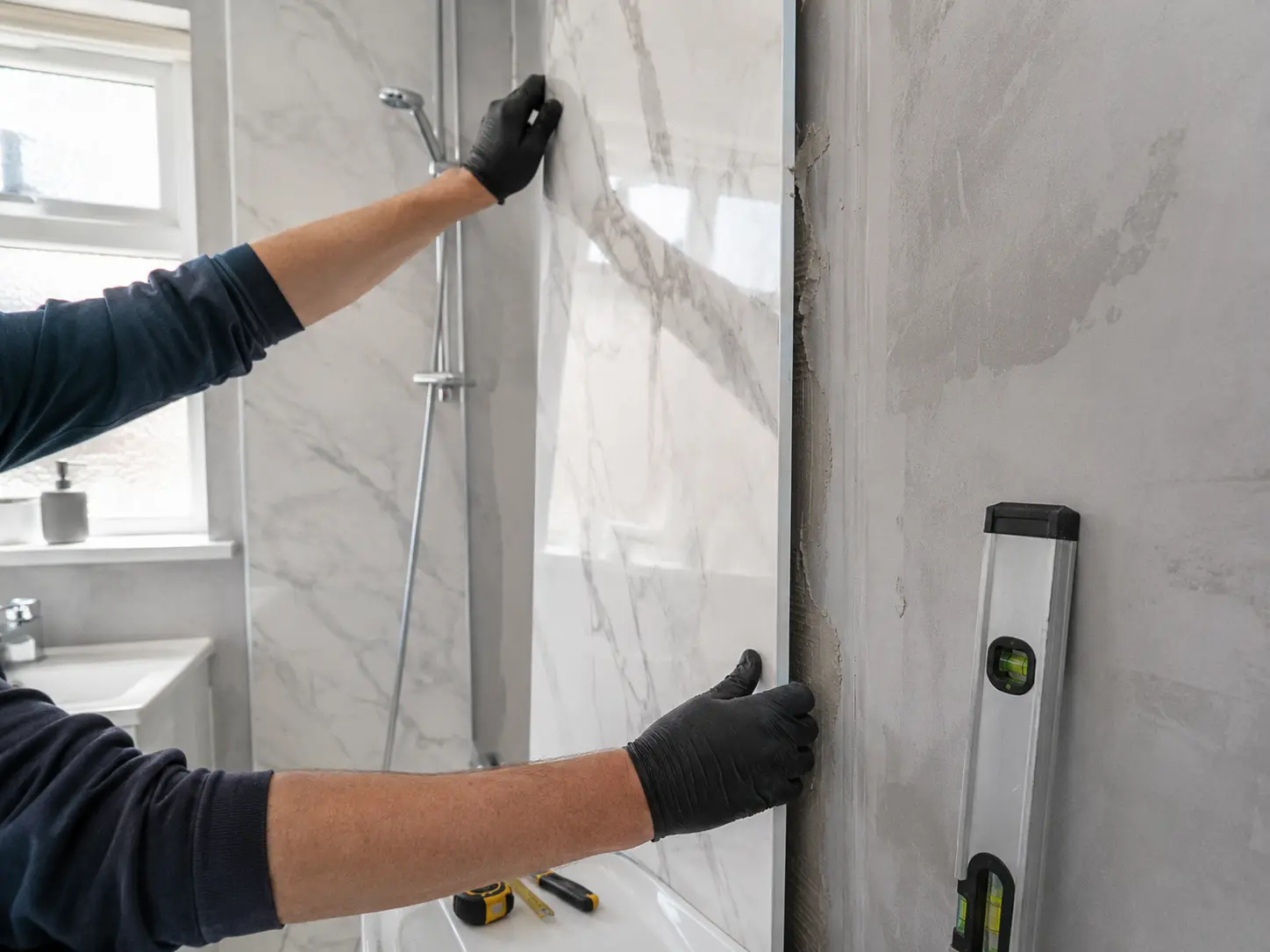
Panels need the wall preparation and support specified for their system. If the surface behind them is unstable or damaged, the visible finish may move or deteriorate even when the panel itself was suitable. A new board should not hide an unresolved leak or damp area. Before installation, ask what wall checks and repairs are included. If removal reveals further damage, have the work explained before it is covered again. Good preparation is part of the completed installation rather than an optional improvement to consider after choosing the colour.
Joins and openings need ongoing attention
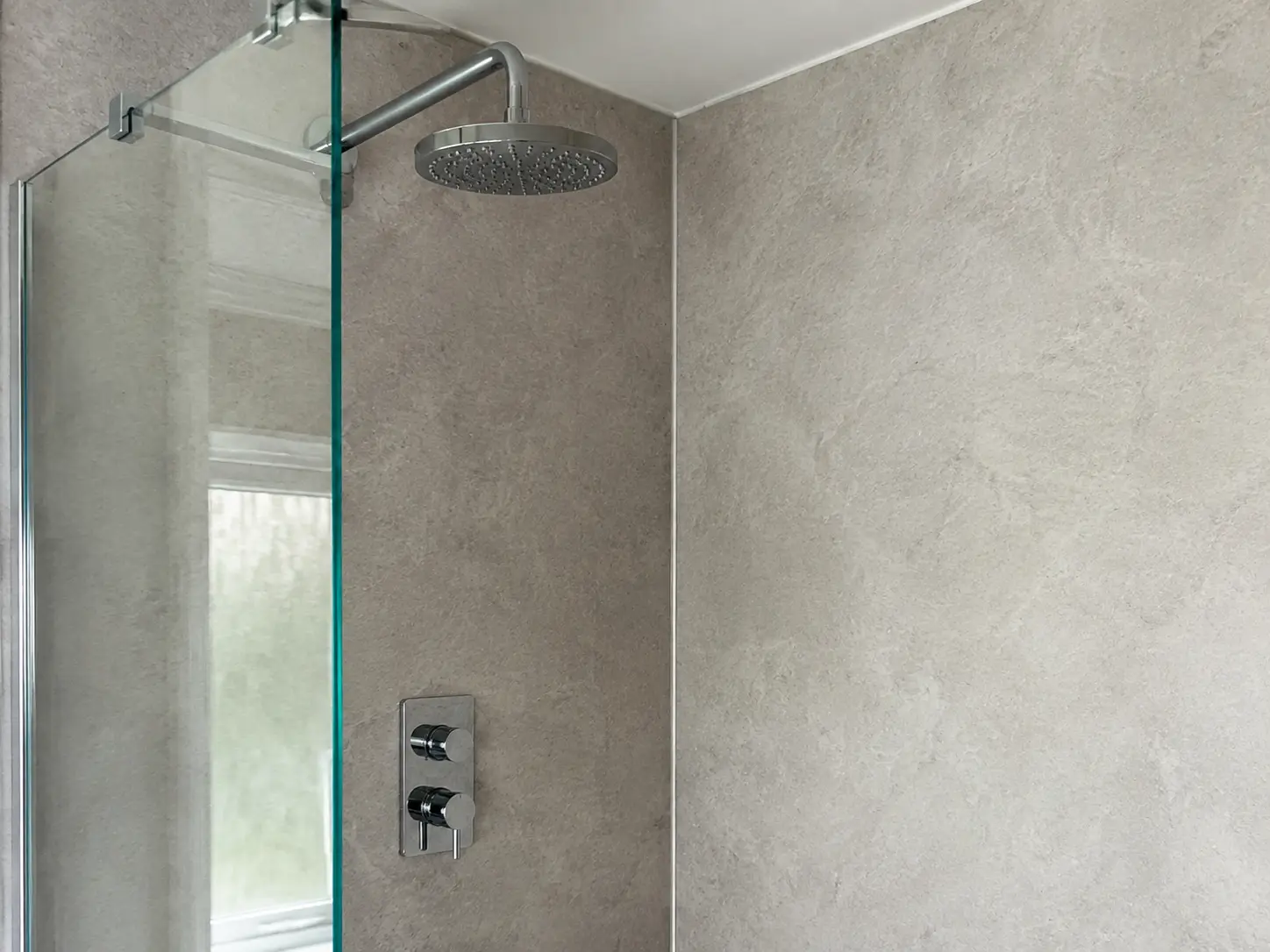
The wall face may look sound while an edge beside the tray or an opening around a control needs repair. Water can enter through a damaged join or opening, so check these areas when cleaning. Look for a visible gap, movement, swelling or a change in the seal. Do not assume that every joint needs replacing on the same fixed schedule; the product guidance and actual condition matter. If something changes, record it and ask the installer or supplier what needs investigating before water continues to reach the area.
For help with your room, see our Wet Wall Installation service.
Use cleaners intended for the surface
Regular cleaning helps keep residue from building up, but harsh treatment can damage a finish. Follow the care guide for the selected panel and use the cloths and products it recommends. A stone-effect print is not real stone, and a glossy board may not tolerate the same treatment as another bathroom surface. Avoid abrasive scrubbing and unapproved chemicals. Keep bottles and baskets from trapping residue against the wall for long periods. A cleaning routine that is gentle and repeatable is more useful than occasional aggressive treatment after marks become difficult to remove.
Keep the rest of the bathroom in good order
A moving tray, leaking shower connection or damaged bath edge can affect the panels beside it. The bathroom works as a collection of connected fittings, so panel care cannot be separated entirely from plumbing and support. Report drips, loose controls and movement when they appear. Ventilation also remains necessary because panels do not remove moisture from the air. If condensation or damp keeps returning, arrange an investigation of the cause rather than repeatedly wiping it away and assuming the new wall surface has made the problem harmless.
Check whether a mark needs a repair
A small surface mark is different from a board that is swollen, loose or separating at a join. Describe what you can see and whether the area feels different without pulling at it or making new openings. Photographs from a wider view and a close view can help the first discussion. The installer may still need to inspect the room. Do not cover a damaged area with an accessory or extra sealant just to improve its appearance. The repair should address the reason for the damage, not only its visible edge.
Keep the panel product details
Keep the panel brand, range, colour reference and any leftover material with the bathroom records. If a repair is needed later, those details make it easier to identify the correct product. Availability can change, and a newer board with a similar name may not match the original colour or pattern exactly. Ask what replacing a panel would involve around your screen, furniture and trims. Thinking about access during the original design can help avoid unnecessary disturbance if a concealed plumbing fitting needs attention in the future.
Choose reliable fitting over a vague lifespan claim
When requesting a Hamilton quote, ask how the wall will be checked, which system will be fitted and what aftercare information you will receive. Compare the actual product and installation work rather than a general claim that panels last a lifetime. Explain whether you are replacing damaged boards or simply changing the style, as those are different jobs. A measured visit and a clear written quote help establish what the room needs. Keep any warranty separate and readable, with the provider's details and the conditions that apply to it.